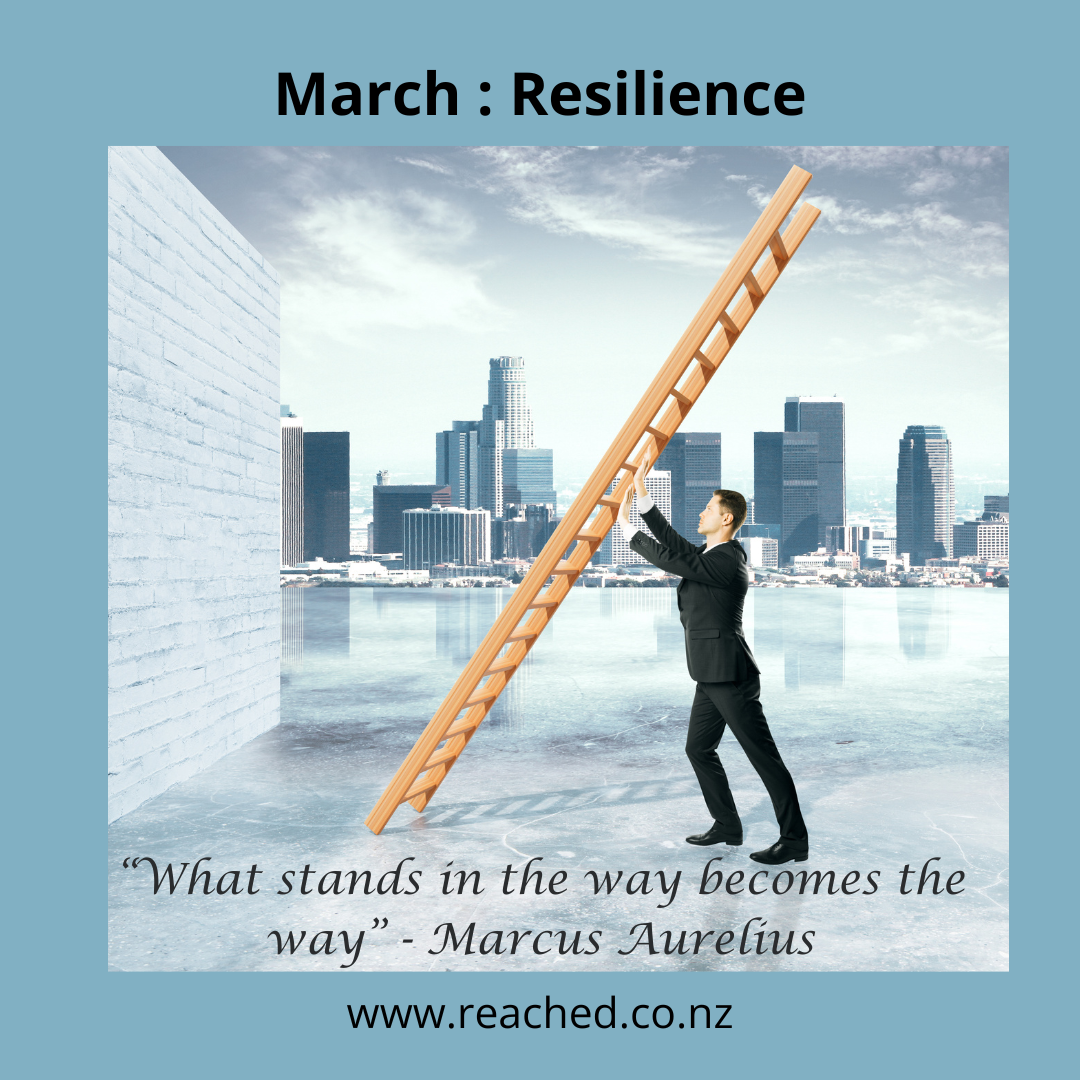
Resilience is often misunderstood as “toughening up”, but authentic resilience is something far more nuanced, more human, more sustainable. It is the quiet daily practice of returning inwards, to yourself – again and again – with compassion and clarity.
Instead of thinking of resilience as a fixed trait, the month of March invites us to look at resilience as a fluid process and a daily practice strengthened through consistent, intentional attention. Resilience, then, becomes the anchor that keeps you steady when the ocean gets choppy.
Psychologists describe resilience as the capacity to adapt in the face of difficulty, to bend without breaking. Contrary to popular belief, resilience is not powered by perfection or relentless positivity. It grows instead from honesty, reflection, healthy boundaries and meaningful connection.
Teachers (and those in the humanity professions) know this well. These professions demand daily emotional labour, rapid problem-solving and the ability to hold space for others, while still tending to our own inner world.
Resilience is less about blocking out adversity and more about metabolising it….allowing challenges to shape you without defining you. In educational theory, Lev Vygotsky’s Zone of Proximal Development mirrors this idea: the right amount of challenge, coupled with the right support, leads to growth. Resilience is built in that space between difficulty and support.
For teachers, March is often when the early-year optimism begins meeting the full impact of reality. Systems settle, demands increase and the weight of the term becomes more tangible. This is the perfect month to reaffirm the practices that nourish endurance. These include:
- acknowledging your limits without guilt,
- seeking help without shame,
- celebrating incremental progress,
- and cultivating micro-moments of restoration.
Resilience also has a profoundly relational dimension. Research across psychology, sociology and educational leadership consistently emphasises that strong relationships buffer stress.
A resilient teacher is never a solitary tower — they are held up by networks of colleagues, mentors, friends and family who share the emotional load. Fred Rogers once said, “Look for the helpers.” A resilient person also allows themselves to be helped.
Equally important is the internal narrative you hold about yourself. The stories you tell yourself shape your capacity to respond to challenge. Carol Dweck’s work on growth mindset reminds us that language matters: “Not yet” is more powerful than “I can’t.” Likewise, Maya Angelou’s wisdom threads through the heart of resilience: “I can be changed by what happens to me, but I refuse to be reduced by it.” This is the mantra of March.
As the season shifts…..summer softening into early autumn (or winter into spring in the northern hemisphere)….nature models resilience vividly. Trees release what is no longer needed. Seeds rest in darkness, gathering strength. Growth is always happening, even when unseen. This cyclical, patient resilience mirrors the emotional rhythm of teaching.
Across this month, the upcoming weekly posts will explore four pillars of resilience:
Week 1: Emotional Resilience – Understanding your inner landscape
Week 2: Physical Resilience – The body’s role in sustaining energy
Week 3: Relational Resilience – How connection amplifies strength
Week 4: Cognitive Resilience – Flexible thinking in complex situations
The weekly reflections will offer gentle, thought-provoking prompts to help you integrate resilience into your daily practice.
As we begin the month of March, reflect on this:
Resilience is not about ‘being tough’ or ‘being hard’; you are not meant to be unbreakable…you are meant to be adaptable. Resilience is instead about being grounded and growing deep roots. It is the art of staying connected to what matters most, even during difficult moments.
In the words of the popular Kiwi band Six60, “Don’t forget your roots, my friend…”. Let March be a month of strengthening your inner roots.
© Gaynor Clarke, March 2026
Don’t wait to take care of yourself. Your wellbeing matters today.
Enrol in my self-paced, online course now for only $4.13 per week:
Overcoming Overwhelm: A Teacher’s Path to Wellbeing
© Gaynor Clarke, March 2026
Gaynor Clarke
B.Ed (Teaching), Cert Tertiary Teaching, PGDip Ed, MEd Leadership
Reach.Teach.Lead.
Reach Education Ltd

Teacher Leadership Mentoring and Life Coaching. Personal and Professional Development.
Gaynor is a teacher educator and mentor facilitating personal & professional leadership wellbeing outcomes for teachers.





Leave a Comment
You must be logged in to post a comment.